 Cane Toads are large and built amphibians. They have dry and warty skin with boney heads. Thety move in short and rapid hops. Their front feet are unwebbed and their back feet are webbed with a leavery web between their toes. Their average size is between 10-15 centimeters. They range in color from brown, yellow, red, grey, and green. The males are smaller than the females. The females can lay between 4,000 to 36,000 eggs. They were introduced to Austrlia in 1935 to control the population of beetles. They live in more open areas including grass land and woodland. They are most populated between Queensland and the Northern Territory. The toads began to cause problems because they were posioning pets and injuring humans with their toxins. They would also posion native animals from Austrlia whose diets consisted of frogs. They would eat large numbers of honey-bees causing management problems for bee-keeper's. They also could carry diseases that could be passed on to native frogs and fish. They tried to biologically effect the breeding process of the toads. There have also been quarintine checks and awareness announcements to inform the people of these dangerous toads.
 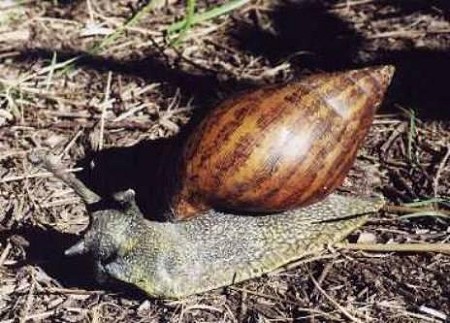 The Giant African Snail is an invasive species to the United States. This snail arrived in 1966. This snail is known as the most dangerous species of snail known. It is the most damaging snail because it eats/damages over 500 different species of plants a year. They are being tested by scientists to see how they can be destroyed. These snails need to be taken care of because they are ruining main products such as peanuts and beans.
 I think that invasive species need to be taken care of because they can destroy the culture and animals of the land. I also think it needs to be illegal to bring new species of animals into a country. The United States and Australia are common because they have the same issues about having invasive species. These invasive species are destroying the land, the animals, and the culture.

No comments:
Post a Comment